Test one product before building a collection
By Michael Santiago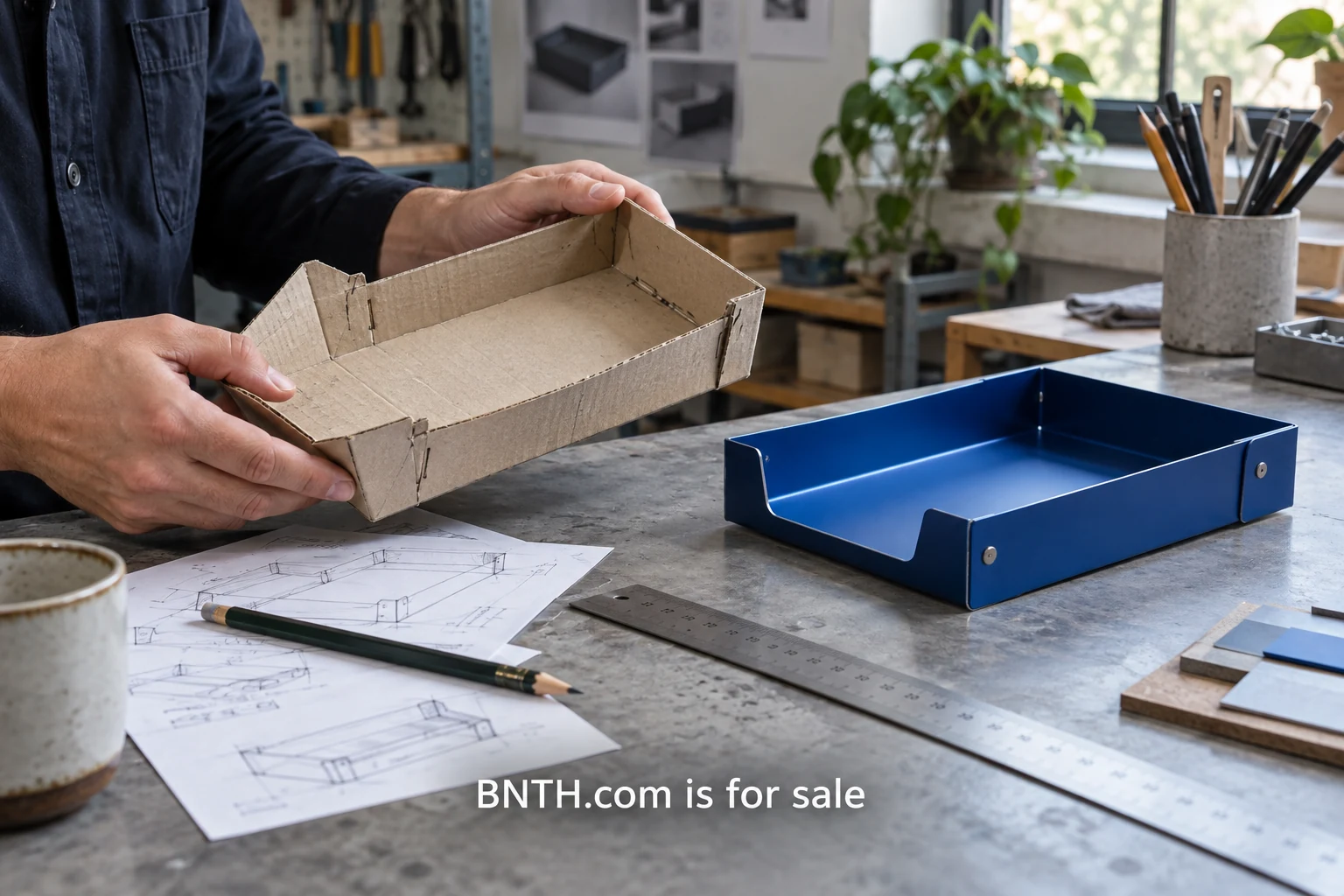
A first product concept test should answer a question you can act on. “Do people like this?” is usually too broad. “Can someone move this tray between two working positions without unloading it?” gives you something to observe and improve. Before developing a whole collection, use one physical prototype to learn about its dimensions, handling, and place in a person's routine. The method below is a practical starting point for a small desk accessory. It is a learning exercise, not proof of demand, long-term durability, or product safety.
Choose the uncertainty that matters first
Write down the decision you are trying to make. Perhaps you need to choose between two tray depths, decide whether a divider should be removable, or determine if a stand blocks access to a charging cable. Select the uncertainty that would be expensive to leave unresolved. A prototype session becomes difficult to interpret when you are simultaneously testing the brand name, finish, price, dimensions, packaging, and an entire collection of related objects.
Define an observable task and a provisional success condition. For a tray, you might ask a participant to arrange the items they normally use, clear space for handwriting, and restore the setup. A useful result could be completing that sequence without items falling out or the participant needing an explanation of where to grip. Treat the condition as a design question. It is not a statistical threshold that can establish performance for every future customer.
Build the cheapest prototype that can answer it
Match prototype fidelity to the question. Cardboard can help evaluate the footprint and whether a notebook fits. It will tell you less about the handling of a heavy metal object. A rough physical sample may reveal an awkward edge while still being unsuitable for testing the final finish. List what your prototype represents accurately and what it does not. Share the relevant limitations with participants so they can understand the task without mistaking a temporary compromise for the intended product.
Make the prototype safe to handle for the planned exercise. If a material or edge creates uncertainty, resolve that before inviting someone to use it. Do not ask a usability participant to serve as a safety test. Photograph and measure the prototype, assign it a version, and keep a record of any adjustments made during preparation. When you later compare feedback, you need to know whether every participant handled the same object.
Recruit people who resemble the intended user
For an initial round, invite five people with working habits relevant to the concept. That is a manageable planning choice, not a guarantee that five participants will reveal every issue. If your intended buyer works at a small desk, test in a similarly constrained space. If the object is meant to move between rooms, include that movement. A friend who has no use for the product can still offer an opinion, but their opinion may not answer your question about the intended customer.
Explain the session, its approximate length, and any recording before it begins. Obtain permission for photographs or video and give participants a way to decline recording. Collect only the information you need. If you plan to quote feedback publicly, ask separately for that permission. Someone agreeing to help improve a prototype has not automatically agreed to appear in an advertisement or endorse a future product.
Prepare a task sheet, not a sales pitch
Use the same short introduction for each participant. Explain that you are testing the object and that confusion is useful feedback. Describe the situation without telling them which part to touch or what answer you hope to hear. The GOV.UK guide to moderated usability testing discusses observing people attempting tasks. Although that guidance often supports service research, its focus on observation is helpful when preparing a physical prototype session.
Write three tasks in everyday language. For the desk tray, the first might be arranging the participant's usual items. The second could be making room to write on a full-size sheet of paper. The third could be moving the tray to a nearby shelf and returning it. Avoid instructions such as “use the side grip,” because you are trying to find out whether that grip is discoverable. Leave room for the participant to choose a different approach from the one you imagined.
Observe before explaining
During the task, note what the participant actually does. Record pauses, repeated attempts, items set aside, and requests for help. If they ask how something works, first ask what they would try if you were not there, unless continuing would create a risk. Let them stop if they are uncomfortable. The session is not a contest, and forcing completion can hide the very problem you need to understand.
Separate observation from interpretation in your notes. “The cable caught under the tray twice” is an observation. “The cable channel needs to be wider” is a proposed explanation and design response. There may be another cause, such as the channel's position or the type of cable used. Keep exact comments distinct from your paraphrases. You can then revisit the evidence without accidentally treating your own conclusion as something the participant said.
Ask about the routine after the task
Once the participant has used the object, ask where it would fit into their current setup and what they would move to make room for it. Ask what they would keep doing in their existing way. Questions about a recent real situation can be more concrete than asking them to imagine an ideal future desk. If they say the object is attractive, acknowledge the comment and return to the practical question: what would they actually put in it?
Price reactions in a friendly prototype session need careful interpretation. A person saying they would buy something is not the same as an order. Record the comment as feedback and keep it separate from observed use. If you later test willingness to pay, plan that as its own exercise with accurate product information and clear terms. Do not mix a hypothetical interest question with claims that the product has already found a market.
Review patterns and choose a revision
After the five sessions, gather the observations by task. Look for repeated difficulties and consider their severity. A cosmetic preference expressed once may deserve less attention than a repeated handling problem that prevents the intended use. Also inspect the exceptions. One participant may have succeeded because their notebook was smaller, revealing that dimensions matter more than you first assumed. Keep those contextual details instead of reducing every session to a single satisfaction score.
Choose a small number of changes and state why you are making them. An illustrative revision might widen the front opening, add a removable non-slip insert, and leave the finish unchanged. Write a prediction for each change: the wider opening should allow a one-handed grip with the tray loaded. That prediction gives the next session a purpose. If you change everything at once, you may like the new object more but have little idea which change addressed the observed problem.
Decide whether the next step is another prototype
The next step could be another concept test, a supplier sample, a packaging trial, or a decision to stop this direction. Choose it from the evidence and the remaining uncertainties. The GOV.UK discovery guidance is useful for its emphasis on understanding a problem before committing to a solution. A small product team can apply that discipline without copying the structure of a government service project.
Before adding a second item to the collection, write a one-page record of what you learned about the first. Include the tested version, participant context, tasks, observed problems, chosen changes, and questions still open. Keep photographs that explain the findings, with permission. This document gives a maker, supplier, or collaborator something specific to respond to. A tested first object will still have uncertainties, but the next investment can follow a clear reason instead of the appeal of a larger collection.